 London

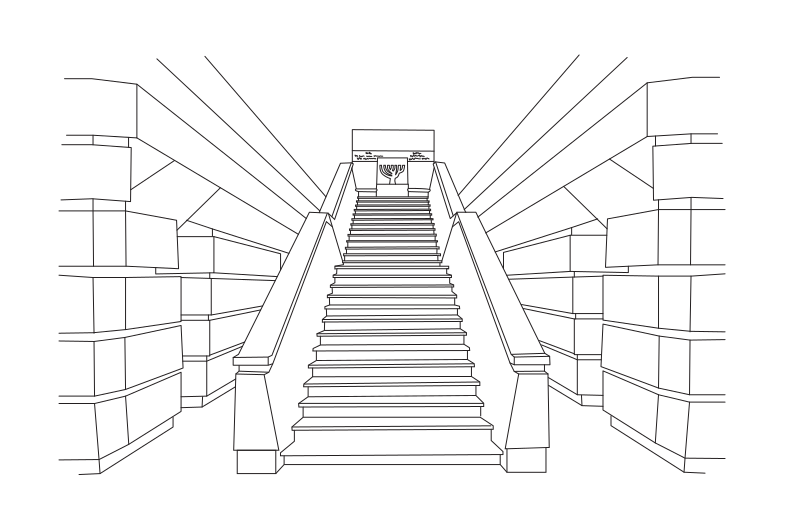
Italian Synagogue at the Eretz Israel Museum in Tel Aviv. Photo: Liat Elbeling
MUZA, Eretz Israel Museum, Tel Aviv, The Jewish Culture and Folklore Pavilion
The Jewish Culture and Folklore Pavilion is one of the permanent pavilions of MUZA, Eretz Israel Museum, Tel Aviv. Founded in 1959, MUZA is a multidisciplinary museum dedicated to the material culture of the land of Israel and its diverse communities, past and present. Its rich collections of archaeology, Judaica, photography, ethnography, and local history have established MUZA as one of Israel’s leading cultural institutions. The museum is dedicated to fostering meaningful dialogues between heritage and contemporary culture, as well as between artistic and scholarly practices.


In recent years, MUZA has undergone a significant process of renewal and development, reimagining the museum as an open and accessible cultural campus. A central element of this transformation is the MUZA Park, a newly designed public garden that welcomes visitors and creates a physical and conceptual connection between the museum and the city. Open to the public throughout the day, the park serves as a vibrant communal space that encourages exploration, gathering, and cultural engagement.
Situated within this renewed landscape, the Jewish Culture and Folklore Pavilion forms an integral part of a dynamic environment where heritage, nature, art, and urban life intersect, inviting new audiences to engage with the museum and its collections.
The Pavilion is home to a collection of more than 7,000 sacred and secular Jewish objects that reflect the breadth and diversity of Jewish life across centuries and continents. The collection encompasses ritual objects, ceremonial art, domestic artifacts, and works that document the religious, social, and cultural traditions of Jewish communities around the world, alongside Judaica created in the land of Israel and the state of Israel.
The Pavilion’s permanent galleries explore the rich traditions of Jewish ritual and everyday life, presenting objects within their historical and cultural contexts while highlighting the dynamic relationships between continuity and change, tradition and innovation. These displays invite visitors to encounter the diverse expressions of Jewish identity as manifested in material culture across different periods and geographic regions. A central feature of the Pavilion is an 18th-century Italian synagogue, carefully relocated and reconstructed within the museum.
In addition to its permanent displays, the Pavilion actively engages with contemporary artistic discourse. Since 2023, it has included a dedicated contemporary art space presenting temporary exhibitions by artists whose works respond to, reinterpret, and engage with the museum’s collections. By bringing historical artifacts into conversation with contemporary artistic perspectives, these exhibitions offer new ways of understanding Jewish culture, memory, identity, and heritage.