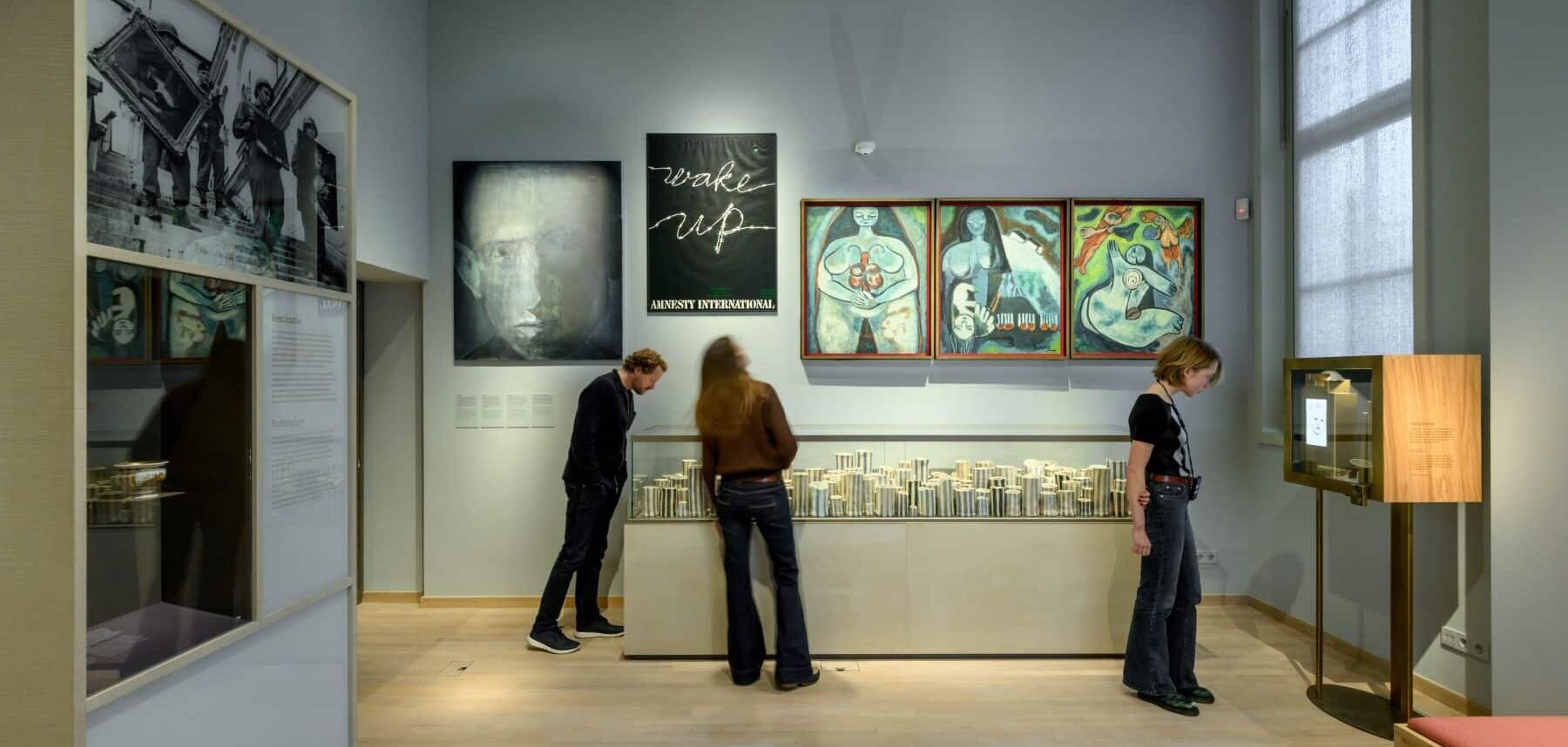
City Museum Nuremberg in Fembo-Haus, 2025. Photo by Meyrav Levy
Curatorial

How do we measure antisemitism and what drives it? This lecture by Prof. Michał Bilewicz offers a rigorous social science perspective on how antisemitic attitudes form and persist, drawing on years of survey, experimental, and longitudinal research.
Date: Tuesday, October 13, 2026 | 13:00–15:30 CET
Place: Zoom
This lecture presents a quantitative social science perspective on antisemitism, focusing on its measurement, prevalence, and the social and psychological mechanisms that sustain it. Drawing on survey, experimental, and longitudinal research, Prof. Bilewicz examines how feelings of deprivation, loss of control, political alienation, and social uncertainty contribute to antisemitic attitudes, in particular conspiracy beliefs that portray Jews as hidden actors influencing political and economic affairs.
The lecture discusses contemporary approaches to measuring antisemitism, including multidimensional scales that assess traditional prejudice, conspiracy beliefs, social distance, and support for discrimination. Particular attention is given to the role of collective victimhood and historical memory: research shows that when groups feel their own suffering is insufficiently recognised, this can fuel resentment towards the commemoration of Jewish victims and feed antisemitic attitudes.
The session also addresses the methodological challenges of studying prejudice — social desirability bias, question wording effects, and the use of indirect measures. Taken together, the lecture demonstrates how quantitative research can help explain the conditions under which antisemitism emerges and persists, and why perceived threat, loss of control, and memory politics remain central to understanding contemporary attitudes towards Jews.
Speaker: Prof. Michał Bilewicz

Michał Bilewicz is a social psychologist and professor at the University of Warsaw whose research focuses on prejudice, antisemitism, intergroup relations, collective memory, and conspiracy beliefs. He has published extensively on the social and psychological roots of discrimination and holds the UNESCO Chair on Antisemitism and Intergroup Hatred. He is also the director of the Center for Research on Prejudice, where he leads interdisciplinary studies on contemporary social challenges in Poland and Europe.
Registration:
Funded by the European Union. Views and opinions expressed are however those of the author(s) only and do not necessarily reflect those of the European Union or European Education and Culture Executive Agency (EACEA). Neither the European Union nor the granting authority can be held responsible for them.