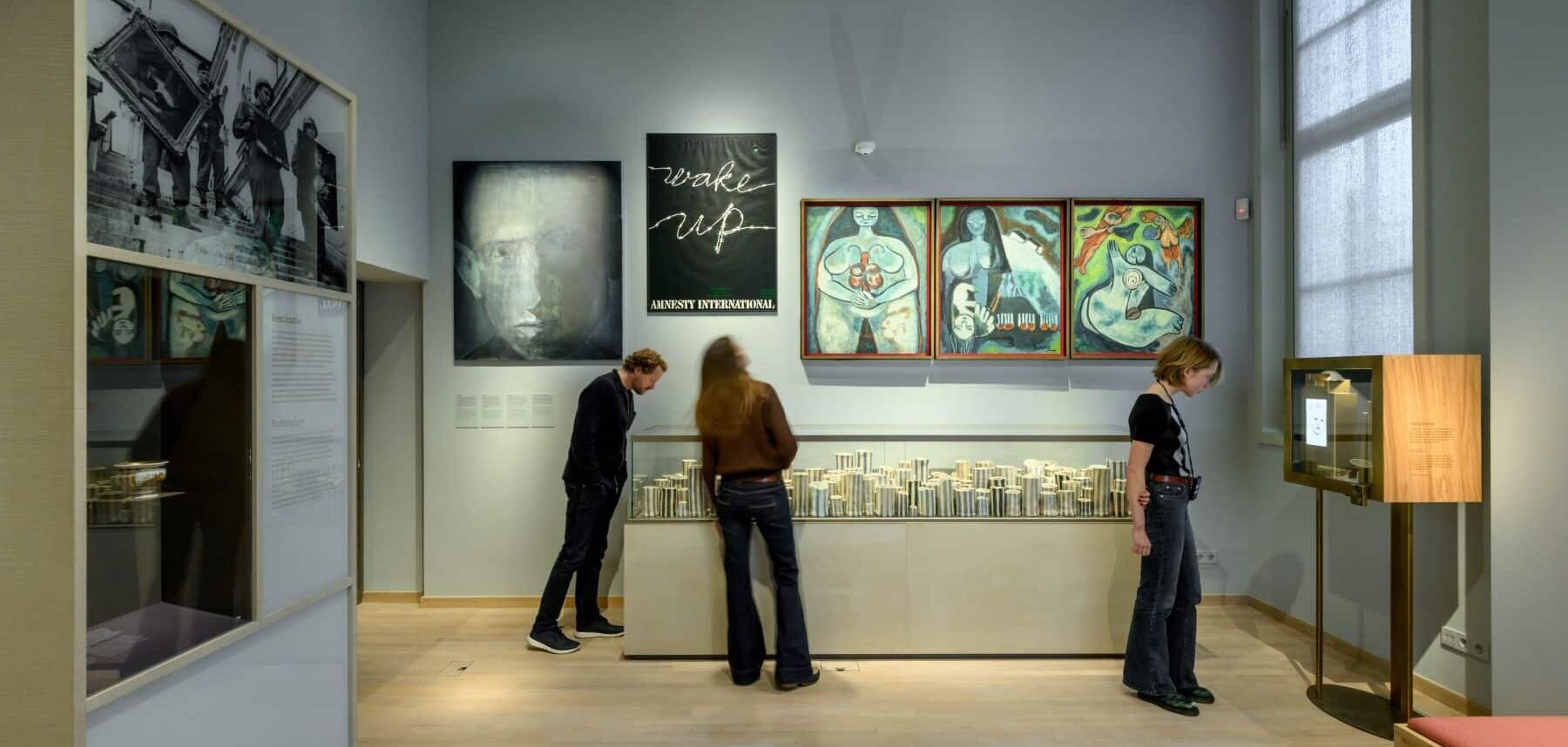
Photo: National Holocaustmuseum Amsterdam
Upcoming Educational
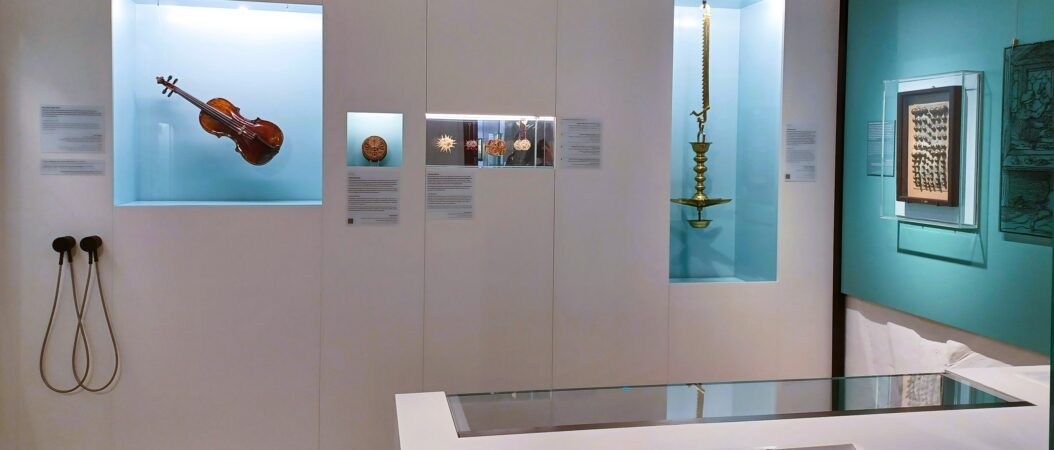
This second curatorial online workshop addresses two interconnected dimensions of representing Jewish heritage in contemporary museums: the integration of Jewish objects and narratives within broader historical and cultural frameworks, and the practical use of transnational research infrastructures to enhance Holocaust-related and cultural heritage documentation.
Thursday, October 8, 2026 | 10:00–13:00 CET | Online (Zoom) | Open to all.
10:10 – 11:25
Dr. des Meyrav Levy, Jewish Cultural Institutions and the Upper Franconia Regional Office, State Office for Non-State Museums in Bavaria
Beyond Judaica: Integrating Jewish Heritage into Museum Narratives
How can museums make Jewish heritage visible without isolating it from the wider local, social, cultural and historical contexts in which it developed? Drawing on practical experience working with museums across Bavaria, this workshop explores the challenges and possibilities of integrating Jewish objects, histories and perspectives into museum narratives. Rather than treating Judaica as a self-evident category, we will consider what makes an object “Jewish” and how its interpretation can open up multiple, overlapping histories. A ritual object, an archaeological find, or an everyday object may tell stories that are simultaneously religious and ritual, social, economic, artistic, political, communal and biographical – revealing aspects of everyday life, sensory experience and coexistence with the surrounding society. Yet, Jewish heritage is still often presented primarily through the lenses of religion and persecution.
The session will further address the tension between integration, visibility and othering: Should Jewish objects be presented in a dedicated separated section, explicitly highlighting their Jewishness? Or should they be fully integrated throughout a wider context exhibition without necessarily foregrounding their Jewish affiliation, considering the historical integration of Jews into European societies? Integration can challenge the separation of Jewish and non-Jewish history, but it can also risk making Jewish experiences and identities less visible. Through examples and discussion, the session invites participants to critically examine the assumptions and curatorial choices that shape how Jewish heritage is represented in their own museums.
11:45 – 12:45 · Q&A: 12:45 – 13:00
Dr. Lovro Kralj, EHRI-ERIC Research and Content Officer at the NIOD Institute for War, Holocaust and Genocide Studies, Amsterdam
Dr. Veerle Vanden Daelen, Vice-Chair of the Data Integration Working Group for the European Holocaust Research Infrastructure (EHRI); Curator and Director of Collections & Research, Kazerne Dossin: Memorial, Museum and Research Centre on Holocaust and Human Rights, Mechelen, Belgium
Connecting the Fragments: EHRI’s Resources for Holocaust Research and Jewish Cultural Heritage
Part I opens with an introduction to EHRI-ERIC, tracing a brief history of EHRI (the European Holocaust Research Infrastructure) and its transition to ERIC (European Research Infrastructure Consortium) status. It continues with an overview of the EHRI Portal and its services portfolio, before turning to the EHRI Community & Training — the role of international partnerships, and an overview of EHRI’s Fellowship Programme and training seminars.
The second part of the session turns to how Jewish museums and other cultural heritage institutions fit into the EHRI ecosystem, and what working with EHRI concretely looks like in practice. This includes how museums can map their own collection management systems onto EHRI’s data model, alongside related topics such as provenance, looted art, and community (micro)histories. From there, the discussion opens onto the practical case for participation: why a Jewish museum should join EHRI, what tangible impact this brings, and how institutions can access EHRI’s expertise, grants and funding opportunities. The session closes with an open floor for networking and collaboration, where participants are invited to raise questions about EHRI’s resources, their practical application, and potential collaborations.
Dr. des. Meyrav Levy is a historian and art historian whose work explores the sensory and emotional reception of rituals and material culture. She earned her degrees in History and Art History at Tel Aviv University and studied the History of Jewish Cultures at Heidelberg and Graz. From 2019 to 2024, she completed her doctorate at the Institute for Jewish Studies at the University of Münster, where her dissertation examined the cognitive reception of illuminated Ashkenazi prayer books, focusing on the multisensory experiences of medieval worshipers. Alongside her research, Dr. des. Levy contributed to the permanent exhibition of the MiQua. LVR-Jewish Museum Cologne and the special exhibition Body. Tradition. Religion. at Münster’s Cluster of Excellence “Religion and Politics.” Since 2024, she has served as a consultant at the Bavarian State Office for Non-State Museums, advising museums and former synagogues on the display and mediation of Jewish cultural heritage to make this history more visible and accessible to diverse audiences.

Dr. Lovro Kralj is the Research and Content Officer at EHRI-ERIC (European Holocaust Research Infrastructure). He is a historian who specializes in the research areas of fascism, antisemitism, genocide, and the Holocaust, with a regional focus on Central and Southeast Europe. His research on the Holocaust in Croatia has been supported by numerous competitive fellowships and grants, including the Claims Conference Saul Kagan Fellowship in Advanced Shoah Studies. Until 2025, Lovro was affiliated with the Department of History at the University of Rijeka, where he coordinated several international projects on Holocaust history and served as the founding Director of the Center for Holocaust and Genocide Research in Southeast Europe.

Dr. Veerle Vanden Daelen is Curator and Director of Collections & Research at Kazerne Dossin, the Memorial, Museum and Research Centre on the Holocaust and Human Rights in Mechelen, Belgium. She holds a PhD in History from the University of Antwerp, where her dissertation focused on the post-war reconstruction of Jewish life in Antwerp (1944–1960). She has been a fellow at both the Frankel Institute and the Katz Center for Advanced Judaic Studies. She is the author of two books, including a study on the rebuilding of Antwerp’s Jewish community, and numerous articles. Veerle has curated multiple exhibitions, including the internationally traveling #Fakeimages – Unmask the Dangers of Stereotypes. Since 2011, she has been active in the European Holocaust Research Infrastructure (EHRI), and she has served as a member of the Belgian delegation to the International Holocaust Remembrance Alliance (IHRA) since 2012. She is also affiliated with the University of Antwerp, where she co-organizes the annual “Contact Day Jewish Studies on the Low Countries.” Her expertise lies in the collection and accessibility of Holocaust sources for education, commemoration, and research, with a particular focus on the Belgian Holocaust within its broader transnational framework.

Please register using this registration form.
Funded by the European Union. Views and opinions expressed are however those of the author(s) only and do not necessarily reflect those of the European Union or European Education and Culture Executive Agency (EACEA). Neither the European Union nor the granting authority can be held responsible for them.