
The Auschwitz Experience in the Art of Former Prisoners
On January 25, 2026, the ‘Museum of Jewish Memory and Holocaust in Ukraine’ in Dnipro opened a new exhibition, created by researchers of the Auschwitz-Birkenau State Museum in Poland and translated into Ukrainian.
On January 27, 1945, troops of the 1st Ukrainian Front entered the territory of the largest Nazi death camp, Auschwitz-Birkenau, located near the occupied Polish city of Auschwitz. One of the first to set foot on the campgrounds was Anatoly Shapiro, a Red Army officer, a Ukrainian Jew, who saw with his own eyes the place where about 1.2 million people were killed over a period of five years. Among the other groups of victims of Nazism, whose lives were taken in the death camp, Jews made up the majority. That is why Auschwitz-Birkenau has become one of the most well-known symbols of the genocide of European Jews – the Holocaust.
On November 1, 2005, the UN General Assembly proclaimed the day of the liberation of the Auschwitz-Birkenau camp – January 27 – as the International Holocaust Remembrance Day and called on Member States to develop educational programs to preserve the memory of this tragedy for future generations, in order to prevent future acts of genocide and to protect, as a historical monument, the place where the mass murder of Jews took place.
The Holocaust history is an integral part of the Ukrainian history, which was under Nazi occupation in the period 1941–1944. Every fourth victim of the Holocaust (i.e. 1.5 million human lives) was associated with Ukraine. Therefore, the International Holocaust Remembrance Day is an important memorial date for Ukraine.

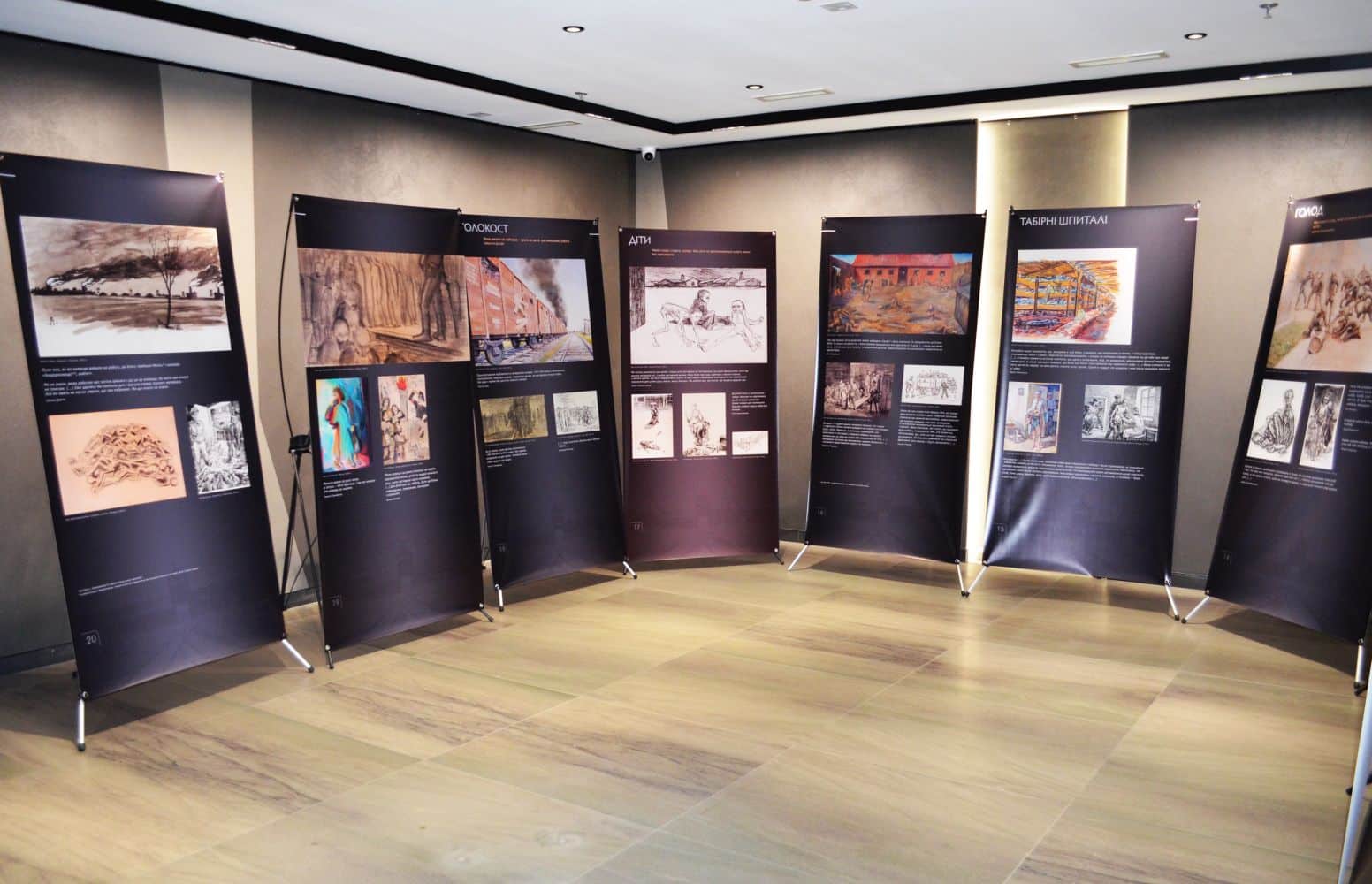

The exhibition materials highlight various aspects of the camp life of prisoners and speak in their voices, as well as in pictorial images created after the end of World War II. Artistic images, combined with direct experience of the trials of the man-made Nazi hell, immerse the visitor in the terrifying atmosphere of the largest factory of death.
The exhibition presents the history of the Nazi “death factory” through the work and memories of former prisoners – people who went through the terrifying ordeals of the hell created by the Nazis. Especially for the Ukrainian audience, the Museum “Jewish Memory and Holocaust in Ukraine”, together with colleagues from the Polish museum, created an adapted exhibition in Ukrainian.
You can visit the exhibition until March 22, 2026, on Wednesdays and Sundays (10:00 a.m. to 6:00 p.m.
Address: Ukraine, Dnipro, Sholom Aleichem Street, 4/26.
Group tours by appointment are also available on Tuesdays and Thursdays.
Click here for more information.