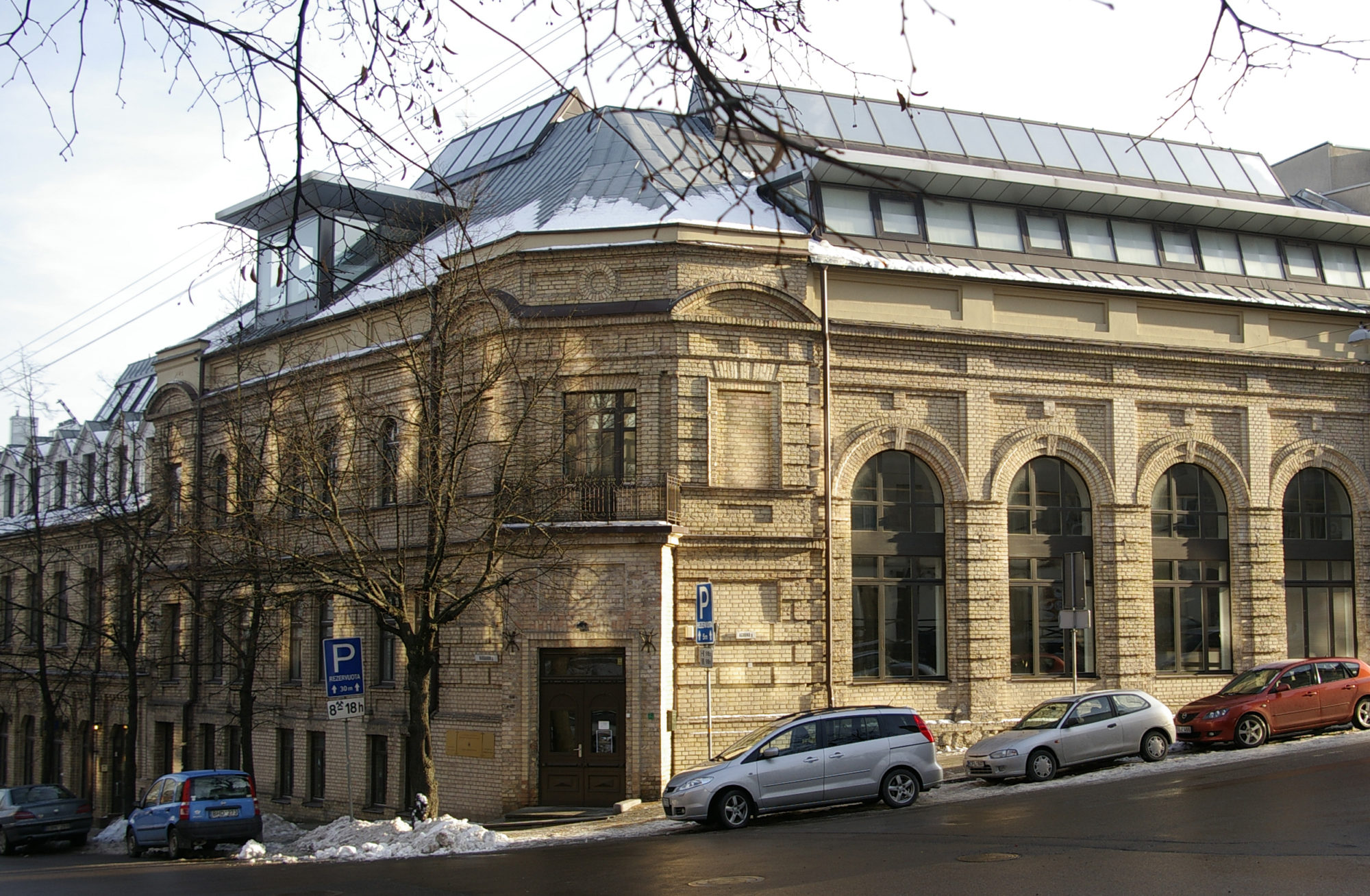

Annual Conference Program – Paris 2025
Annual Conference Paris 2025
Jewish Museums and Democracy
.
Day I
Sunday, July 6
10:30 Conference registration
Free visits and guided tours to the permanent and temporary exhibitions at the musée d’art et d’histoire du Judaïsme (mahJ).
12:30 – Lunch
13:30 – Opening Ceremony
Welcome keynote by Paul Salmona, director of the mahJ, and Mirjam Wenzel, chair of the AEJM board and director of the Jewish Museum Frankfurt
14:00 – Plenary Session I
Transformation Processes of Jewish Museums amid Changing Cities
Most Jewish museums in Europe are located in cities, a lot of them underwent a profound transformation in recent years. The opening panel of the conference is dedicated to the relationship between transformations in museums and the city. Are Jewish museums embedded in the urban cultural landscape? How do they define their relation to the city in its historical and contemporary form? Which changes in urban society have an impact on Jewish museums? And what changes would they like to initiate with their own transformation?
Panel discussion with:
• Nesim Bencoya, general coordinator, The Izmir Jewish Heritage Project
• Pavla Niklova, director, Jewish Museum in Prague
• Thomas Otten, director, MiQua. LVR-Jewish Museum in the Archaeological Quarter Cologne
• Paul Salmona, director, Museum of Jewish Art and History, Paris
Chair: Mirjam Wenzel
15:00 – Short break
15:15 – Plenary Session II
Jewish Museums and the Values of Democracy
The French Revolution and the Code Civil were based on the idea of equal rights and social justice and inspired revolutionary upheavals throughout Europe in the 19th and 20th centuries. In many countries, Jews played a pivotal role in these upheavals, and the guarantee of equal rights had an immense effect on Jewish life and culture. Today, right-wing populism is on the rise, and liberal democracies are increasingly turning into authoritarian regimes. What is the impact of this development on Jewish museums? Which position do they hold in the democratic fabric? In what ways can they function as democratizing institutions? How do they refer to the history of democracy? What narratives of emancipation and human rights do they represent?
Panel discussion with:
• Perrine Simone-Nahum, historian and philosopher, École normale supérieure, Paris
• James S. Snyder, director, Jewish Museum New York
• Barbara Staudinger, director, Jewish Museum Vienna
• Michal Vaněk, director, SNM Museum of Jewish Culture, Bratislava
Chair: Paul Salmona
16:15 – Coffee Break
17:00 – Professional Session I
Towards the Future: The Impact and Participation of Young Professionals in Jewish Museums
Today’s early-career professionals will shape the future of Jewish museums. What is important for them? What are their main concerns? How can a museum profit from transgenerational collaborations?
Impulse by Brigitte Sion, Museum Programme Officer, Rothschild Foundation Hanadiv Europe
1) Workshop with Lisa de Goffau, Curator, Jewish Cultural Quarter Amsterdam
The Impact and Participation of Young Professionals in Jewish Museums
Today’s early-career professionals will shape the future of Jewish museums. What is important for them? What are their main concerns? How can a museum profit from transgenerational collaborations? In this workshop, we will look at best practices for engaging young professionals specifically in the field of Jewish studies, arts, and culture, facilitating knowledge transfer between colleagues, and fostering collaboration between different generations. In addition, we will address a number of specific challenges and brainstorm about possible creative solutions and ideas.
2) Workshop with Monika Woznicka, head of customer service section, POLIN Museum, Warsaw
How Can We Strengthen Resilience and Mental Health
This workshop will explore practical strategies to strengthen resilience and mental health in high-stress cultural and public service environments, particularly in Jewish museums. We will reflect on what supports individual and organizational well-being, drawing on the experience of the POLIN Museum of the History of Polish Jews during the pandemic and on initiatives developed by engaged staff to promote emotional and mental well-being. The session offers a space to exchange tools, share personal insights, and build a collective vocabulary around emotional sustainability in professional life.
3) Workshop with Léa Weill, junior curator & Elisa Boularand, educator, mahJ
Speed Networking
This workshop is an opportunity for junior and senior professionals to exchange about their perspectives, needs and challenges. The participants will have several short time slots to discuss with as many participants as possible. To start the conversation, questions will be provided to get tips on how to build a career in museums nowadays.
18:30 – End of the program
Day II
Monday, July 7
9:30 – Arrival & Coffee
10:00 – Plenary Session III
Artistic and Curatorial Perspectives: Contemporary Art in Jewish Museums
What role should contemporary art play in Jewish museums? Should these institutions be spaces for artistic experimentation and change-inspiring dialogue, or should they focus primarily on preserving heritage? In an era of rising antisemitism, global polarization, and conflict, can contemporary art offer meaningful responses? This panel brings together curators, museum directors, and an artist to explore how contemporary artistic expression engages with Jewish heritage, historical narratives, and pressing social and political issues. We will discuss the challenges of exhibiting works that might be considered “politically sensitive,” strategies for reaching new audiences, and the future of contemporary art in Jewish museums as a space for innovation, dialogue, and cultural continuity.
Panel discussion with:
• Joseph Dadoune, independent artist, Paris
• Julia Friedrich, director of collections and exhibitions, Jewish Museum Berlin
• Judith Hoekstra, curator, Jewish Cultural Quarter Amsterdam
• Pascale Samuel, head of modern and contemporary art collections, mahJ
Chair: Misha Sidenberg, chief curator and deputy director, Jewish Museum in Prague
11:00 – Short break
11:15 – Professional Session II
Workshops on Strategies in Collecting and Exhibiting Art, and involving Artists
Interactive workshops addressing photography, artist residencies, artistic interventions, and collecting strategies for contemporary art in Jewish museums.
1) Workshop with Nicolas Feuillie, curator, mahJ & Friedrich Tietjen, head of photo collections, archive & library, Jewish Museum Frankfurt
Photographic media in Jewish Museums. Approaches to collecting and exhibiting.
The workshop will explore the many different applications photographic media have in Jewish museums. After a brief introduction to the subject, Nicolas Feuillie (MahJ) and Friedrich Tietjen (JMF) would love to discuss the manifold ways art prints, photo albums, videos, reproductions and other media are put to use: What do we expect from these different media? What can be achieved when they are employed? And what are traps and shortcomings of these media?
2) Workshop with Ewa Chomicka, curator, POLIN Museum, Warsaw
Process, Intervention, Empowerment. Artistic and Curatorial Strategies for Contemporary Times.
Using the POLIN Museum of the History of Polish Jews as a case study, we will explore how interventionist, performative, and experimental actions can engage in dialogue with history while also addressing contemporary challenges. Process, Intervention, and Empowerment will serve as our initial categories for discussing the involvement of artists in museums. Next, building on the diverse experiences of participants, we will explore how this catalogue can be expanded and which artistic and curatorial strategies are most essential in addressing the challenges of our time.
3) Workshop with Eva Atlan, deputy director, Jewish Museum Frankfurt
Collecting Contemporary Art & Jewish Culture.
In this one-hour workshop, we will attempt to establish the criteria for collecting contemporary art in a Jewish museum. No prior knowledge of the contemporary art scene is required.
12:15 – Lunch
14:00 – Keynote Speech
Knowing Jewish culture and history as a remedy against antisemitism
Katharina von Schnurbein, European Commission Coordinator on combating antisemitism and fostering Jewish life
14:45 – Plenary Session IV
The Impact of Polarization within Society
Western societies are increasingly polarized, particularly concerning discourse on migration and diversity, Islamism and other religious fundamentalism, the invasion of Ukraine, the war in Israel and Gaza, and the status of cultural institutions. How can Jewish museums cope with the pressure resulting from this polarization? How shall they act or monitor activities on social media? Should Jewish Museums be places for discourse on controversial subjects or places of comfort and self-assurance?
Panel discussion with:
• Jakub Nowakowski, director, Cape Town Holocaust & Genocide Center
• Amedeo Spagnoletto, director, Museum of Italian Judaism and the Shoah (MEIS), Ferrara
• Mats Tangestuen, academic director, Jewish Museum Oslo
• Eva-Maria Thiele, chief curator, Berend Lehmann Museum – Moses Mendelssohn Academy, Halberstadt
Chair: Joanna Fikus, head of exhibitions, POLIN Museum, Warsaw
15:45 – Coffee Break
16:30 – Plenary Session V
Beyond the Shoah
Is the history of the Shoah an unavoidable framework for European Jewish museums? Does this focus on risk overshadow the diverse forms of Jewish life that existed before the destruction? Can we envision museums that are not centered solely on discrimination, persecution, and the destruction of European Jewry?
Panel discussion with:
• Sharon Reichel, curator, MEIS Ferrara
• Paul Salmona
• Zsuzsanna Toronyi, director, Hungarian Jewish Museum and Archives, Budapest
Chair: Mats Tangestuen, academic director, Oslo Jewish Museum
17:30 – End of the Program
19:00 – Reception
at the Hôtel de Ville (City Hall)
Day III
Tuesday, July 8
9:30 – Arrival & Coffee
10:00 – Plenary Session VI
Pecha Kucha
Chair:Petra Katzenstein, manager Jewish Museum Junior, Jewish Cultural Quarter Amsterdam
1) A Museum Without Walls: Re-emerging Jewish Heritage of Belarus
Maya Katznelson, founder & Grigoriy Kheifets, product manager and digital curator Belarusian-Jewish Cultural Heritage Center
In response to the impossibility of creating a physical museum in Belarus, this ongoing initiative is developing the Virtual Belarusian Jewish Museum – a flexible, evolving museum concept shaped by digital tools, public participation, and cross-border collaboration. Currently in progress, the project includes immersive VR reconstructions of lost synagogues (Wolpa and Oshmyany) and the launch of a community-driven digital collection, combining institutional materials with personal stories and artifacts from across the globe.
2) A new Project of K. Jews, Europe, the 21st Century Review
Elie Petit, journalist, K. Review
3) The new Jewish Museum of Switzerland
Naomi Lubrich, director, Jewish Museum of Switzerland
In November 2025, the Jewish Museum Switzerland will move to a new building near to the premises of the former medieval Jewish cemetery in the heart of Basel. Key topics of the new permanent exhibition are medieval Ashkenas, early modern Hebrew book printing, rural Jewish life in Switzerland, Alsace and southern Germany, the Zionist Congresses, refugees in Switzerland during the Shoah as well as Maghrebi and Sephardic francophone Judaism in the 20th century.
10:30 – 15 minute break
4) The Slovak Jewish Heritage Database
Maroš Borsky, director, Jewish Community Museum Bratislava, Zsuzsanna Toronyi director, Hungarian Jewish Museum and Archives, Budapest, Jana Švantnerová, curator, Jewish Community Museum, Bratislava
This project is a collaborative effort to document, preserve, and present Judaica and Jewish heritage across Slovakia. It builds on the expertise of the Jewish Community Museum in Bratislava and the Hungarian Jewish Museum and Archives and is a model of cross-border cooperation and knowledge transfer in heritage work.
5) Ethics and Othering
Sandy Hollis, head of education, Sydney Jewish Museum
In a world of increasing polarity, the Sydney Jewish Museum’s “Ethics and Ending Othering” program fosters awareness of the social responsibilities of citizenship in Australia and allows participants to think critically about their roles in enhancing social cohesion in society. By engaging with current and historical issues they come to appreciate the diverse beliefs and values inherent in the mosaic of cultures and traditions that make up Australia today.
6) Support to Jewish culture & life at EU level
Pascale Falek, policy officer, European Commission
11:15 – Presentation of CAJM activities
11:45 – Plenary Session VII
Goals and Challenges of Cultural Programming
Cultural programming is playing an increasingly significant role in the activities of Jewish museums. What objectives does it aim to achieve? What resources does it require? What results can be expected from it?
Panel discussion with:
• Erika Hedenström, director, Jewish Museum of Sweden
• Marc Francesch, program manager European Days of Jewish Culture (EDJC), European Association for the Preservation and Promotion of Jewish Culture and Heritage (AEPJ)
• Carmen Álvarez Nogales, director, Jewish Museum Toledo
Chair: Nisya Isman Allovi, director, The Quincentennial Foundation of Turkish Jews, Istanbul
12:45 – End of the Conference / Lunch
in the Hôtel de Saint-Aignan former stables
13:30 – Annual General Meeting
14:30 – Excursions
Optional tours of the Jewish Marais, mahJ exhibitions, and nearby institutions.

with the support of the Foundation for the Memory of the Shoah
Latest events:

Photo: National Holocaustmuseum Amsterdam
Educational
Online Workshop: Old and Modern Forms of Antisemitism. A Quantitative Social Science Perspective.

Mid-18th-century reception room from Kozani (Benaki Museum), featuring a late 19th–early 20th-century Sephardic costume from Salonika, courtesy of the Jewish Museum of Greece.
Upcoming Curatorial
AEJM Curatorial Training Workshop in Athens, November 16–18, 2026
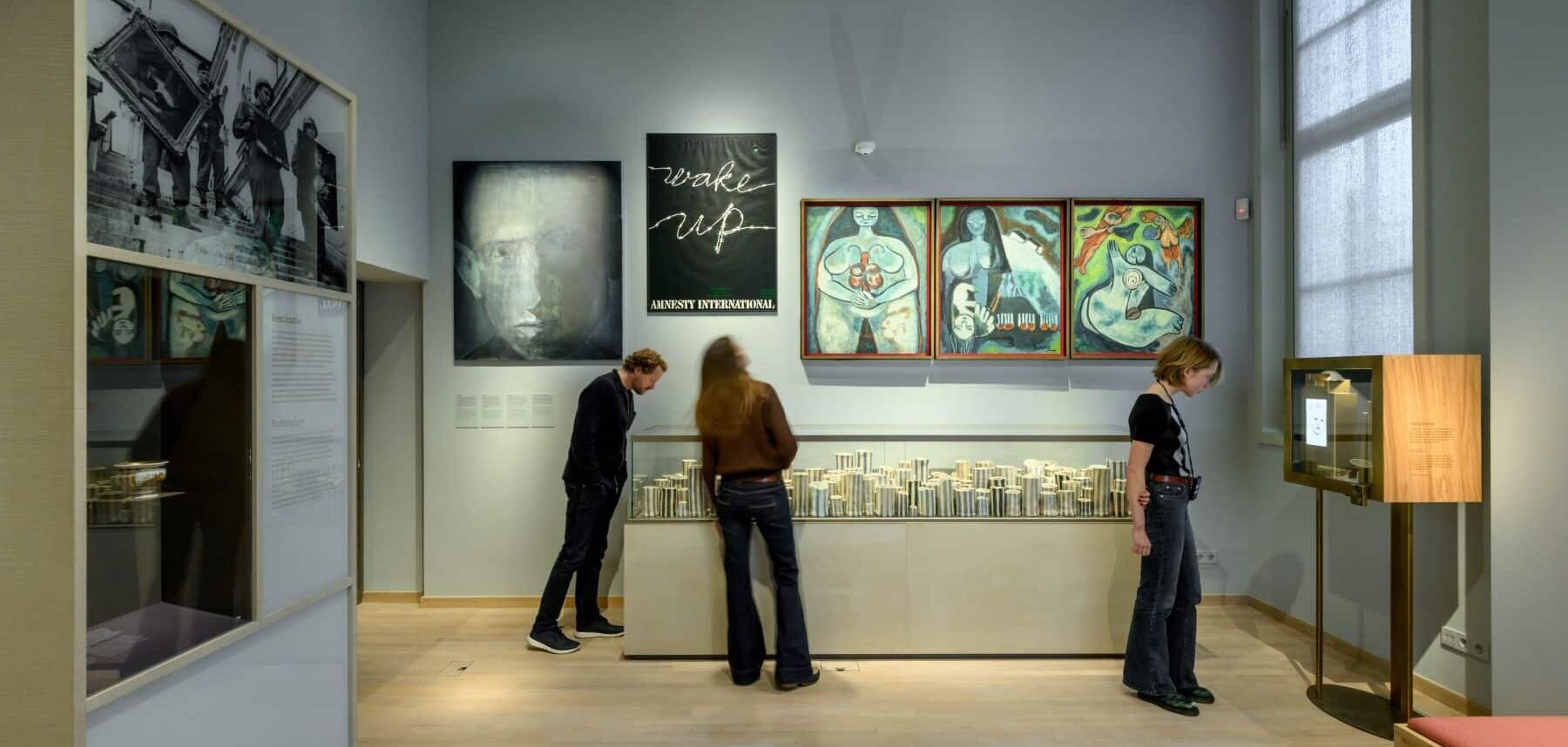
Photo: National Holocaustmuseum Amsterdam
Upcoming Educational