 Exhibition

Migration from the Ottoman Empire to Argentina. Temporary Exhibition at the Museum of Turkish Jews in Istanbul
This exhibition follows Sephardic immigrants from the Ottoman Empire and Turkey to explore how family networks and shared hometown ties shaped their migration, settlement, and communal life in Buenos Aires. Through photographs, archival documents, and letters, it traces the relationships that connected those who left with those who followed and those who stayed.
Here, “Sephardic Jews” refers specifically to Judeo-Spanish-speaking Jews from the Ottoman Empire and Turkey. Their language and customs also shaped the communities they formed in Buenos Aires.
During the first wave of Sephardic immigration in the early twentieth century, informal connections with relatives and people from their hometowns helped many migrants move to Buenos Aires. News from those already settled encouraged others to follow, linking places of origin with new destinations.
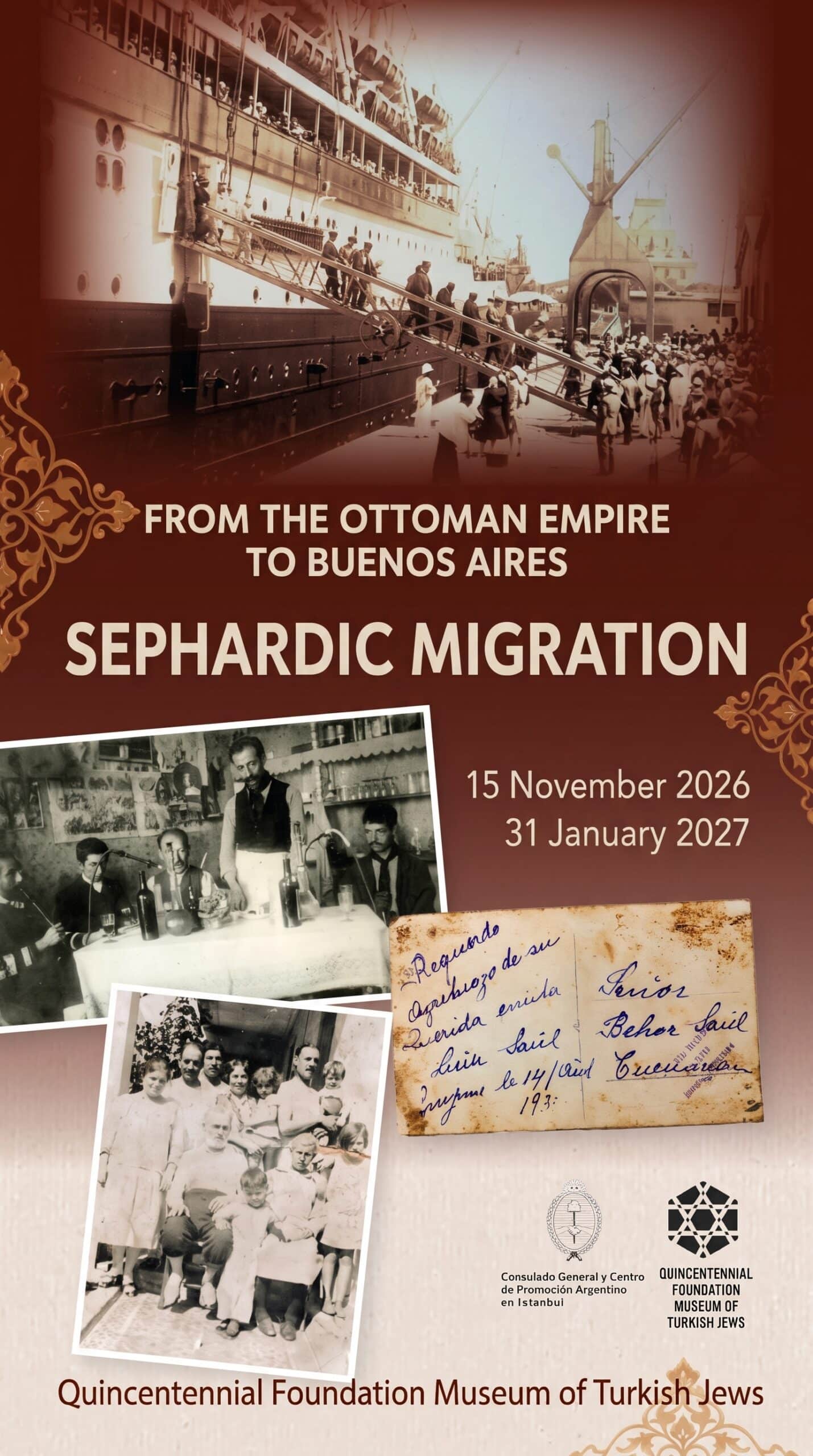
In Buenos Aires’s neighborhoods, Sephardic migrants built communities around synagogues, businesses, homes, and associations. These places helped them sustain existing ties while forming new relationships.Alongside Leibiusky’s research, the exhibition will feature sources, documents, photographs, and Judeo-Spanish materials gathered through archival research conducted and curated by Javier Leibiusky, Cenker Sarıkaya, and Nisya İşman Allovi.
The exhibition will be presented in the museum’s newly renovated mikveh space.


